


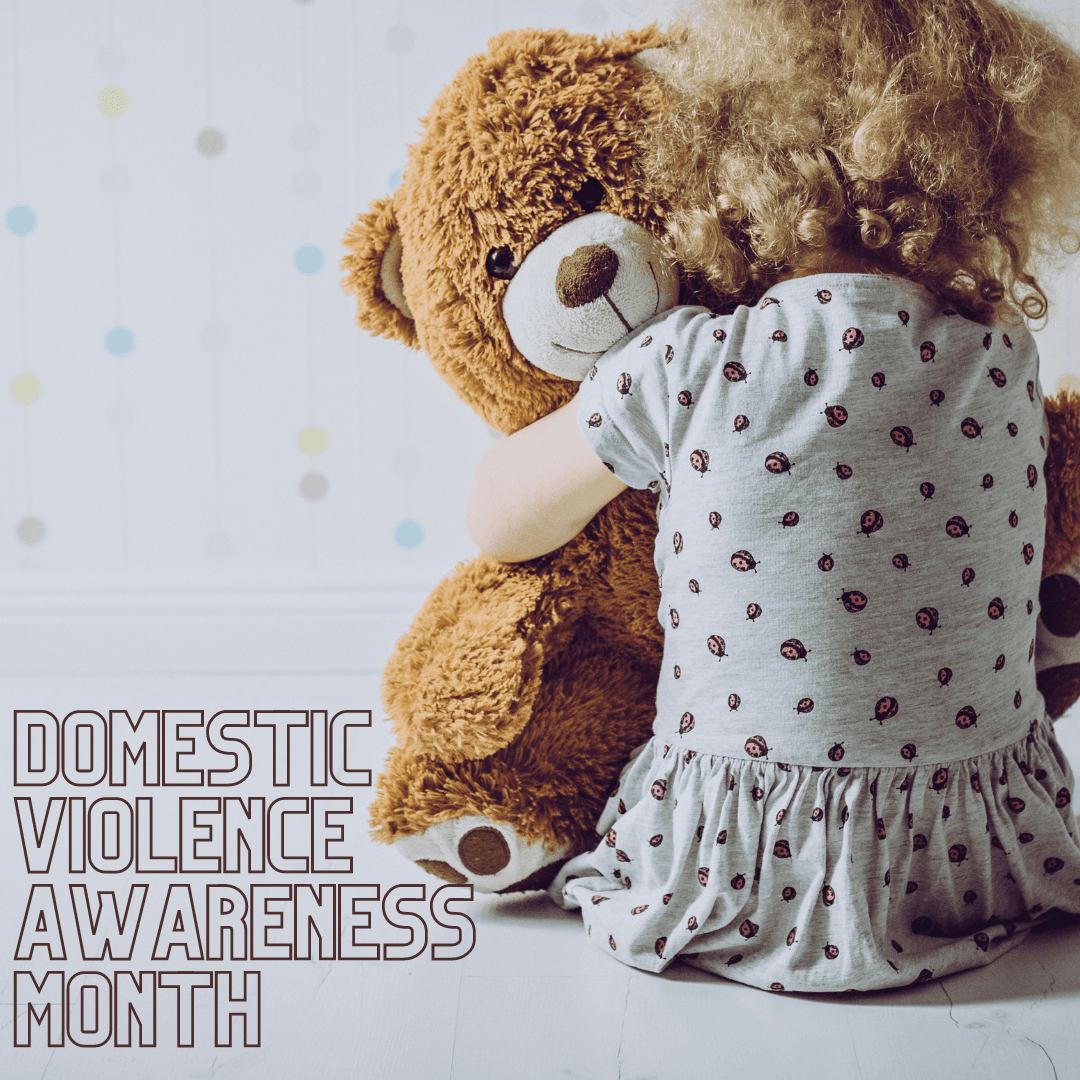
Children who hear and see domestic violence are victims.
After reading this paragraph, close your eyes and imagine yourself as a child who hears the sound of adults you love arguing. Imagine the argument escalating. Can you recognize the change in a cherished adult's voice or the sound of footsteps approaching? Can you imagine lying awake listening and scared that you will be safe?
For children growing up in homes where domestic violence occurs, fear and uncertainty can become part of everyday life. While domestic violence is often hidden behind closed doors, its effects on children can reach into their classrooms, friendships, relationships, and futures.
Domestic Violence Is About Power and Control
Domestic violence is not simply an argument between two adults. It is a pattern of behavior used to gain or maintain power and control over another person.
It can include physical violence, threats, intimidation, emotional abuse, isolation, financial control, and other forms of controlling behavior.
One of the most important lessons in new CASA volunteer training is understanding why someone experiencing domestic violence may remain in an abusive relationship.
Leaving isn't always a simple or safe choice. In fact, the danger can increase when an abusive partner feels they are losing control. Survivors may face threats, financial dependence, fear of losing their children, limited access to housing or concerns about what will happen if they leave.
Rather than asking, "Why didn't they just leave?" we should ask, "What barriers are preventing this person and their children from being safe?" That change in perspective matters, especially when families become involved in the child welfare system.
What Domestic Violence Looks Like Through a Child's Eyes
Children exposed to domestic violence do not all respond in the same way.
Some become quiet and withdrawn. Others may act out, struggle in school, or have difficulty trusting adults. Some become unusually responsible, trying to protect younger siblings or comfort a parent.
Depending on their age and experiences, children may exhibit:
- Anxiety, fear, or constant worry about their safety.
- Difficulty sleeping, nightmares or frequent headaches and stomachaches.
- Trouble concentrating or declining school performance.
- Aggression, anger, or difficulty managing emotions.
- Withdrawal from friends and activities they once enjoyed.
- Feelings of guilt or responsibility for the violence.
- Difficulty developing healthy, trusting relationships.
Some children may believe they caused the violence or that it is their responsibility to stop it. Others learn to remain silent, believing that talking about what happens at home will only make things worse. And sometimes, children show no obvious signs of distress at all.
But silence does not mean a child is unaffected.
Exposure to domestic violence can shape how children understand relationships, safety, trust, and love. Without appropriate support, those experiences may affect their emotional and social development long after the violence has ended.
Protecting Children Means Supporting Families
When domestic violence is present in a family, protecting children requires more than simply removing them from a dangerous situation. It requires understanding the dynamics of abuse, identifying the source of danger, and recognizing the protective efforts of the parent experiencing violence.
An important principle emphasized in CASA volunteer training is that survivors should not be unfairly blamed or further victimized by the systems intended to protect their children. A parent experiencing abuse may be doing everything possible to keep their children safe under extraordinarily difficult circumstances. When safe and appropriate, helping a survivor access housing, legal protection, counseling, financial resources, and community support can also help create a safer, more stable environment for their children. The goal should always be to protect children while preserving safe family relationships whenever possible.
How CASA Volunteers Make a Difference
For children who enter the child welfare system, a CASA volunteer can provide something especially meaningful: a consistent, caring adult who listens. They work to understand each child's individual circumstances and advocate for the support needed to help that child heal.
A CASA volunteer may:
- Advocate for trauma-informed counseling and other services that address the child's emotional needs.
- Help ensure the child's safety and well-being remain central to court decisions.
- Identify opportunities to preserve safe, supportive family relationships.
- Encourage access to resources that support family safety and stability.
- Provide the court with information about the child's needs, experiences and progress.
- Offer a consistent presence during a time of tremendous uncertainty.
CASA volunteers don't investigate domestic violence or replace trained counselors, attorneys, or other professionals. Their role is to ensure that the child's needs and best interests are not overlooked. For a child who has lived with fear, having an adult who consistently shows up, listens, and follows through can help rebuild a sense of trust.
Trauma Does Not Have to Define a Child's Future
Children who experience domestic violence can heal. Safe environments, supportive relationships, appropriate mental health services, and caring adults can make a meaningful difference in helping children develop resilience.
A child who has witnessed violence can learn that disagreements don't have to involve threats or fear. A child who has experienced instability can discover what it means to feel safe. A child who has learned to remain silent can begin to understand that their voice matters. Healing takes time, and every child's journey is different. But with the right support, children can build healthy relationships and move toward a future that is not defined by the violence they experienced.
Every Child Deserves to Feel Safe
During Domestic Violence Awareness Month, we encourage Nebraskans to remember the children whose experiences may go unseen.
They may not have bruises. They may not tell anyone what is happening at home. They may even appear to be doing just fine. But they deserve to be seen, heard and supported.
At Nebraska CASA, we believe every child deserves a safe, permanent home and the opportunity to thrive.
Domestic violence may take away a child's sense of safety. Together, we can help restore it.
Be the Voice a Child Needs
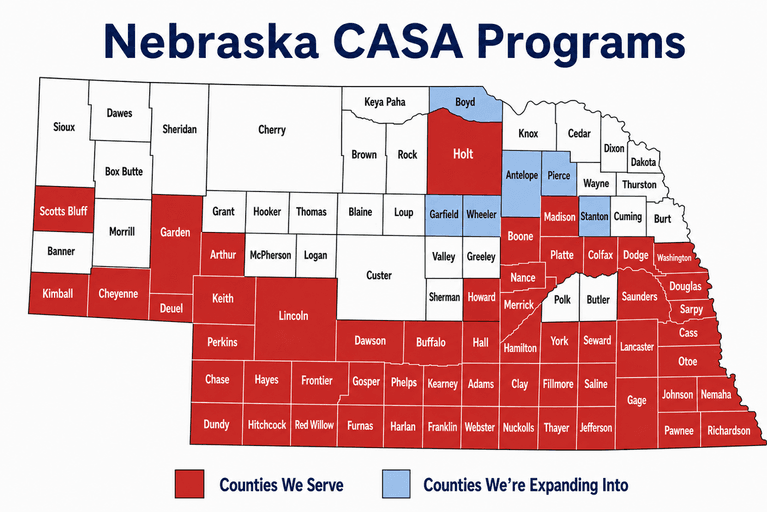
Across Nebraska, CASA programs need dedicated volunteers willing to stand up for children who have experienced abuse or neglect.
You don't need to be an attorney or social worker to become a CASA volunteer. You need compassion, commitment and the willingness to learn.
Nebraska CASA and our local programs provide training and support to help volunteers become effective advocates for children.
Learn how you can make a difference at www.casaforthekids.org.
Need Help?
If you or someone you know is experiencing domestic violence, confidential help is available through the National Domestic Violence Hotline.
Call: 1-800-799-SAFE (7233)
Text: START to 88788
Visit: www.thehotline.org
If someone is in immediate danger, call 911.